



Yes. A peristaltic hose pump is self-priming, which means it can start with an empty suction line and draw liquid up to the pump without filling the pump or pipework with process liquid first. The achievable lift depends on the pump, hose condition, liquid and suction arrangement.
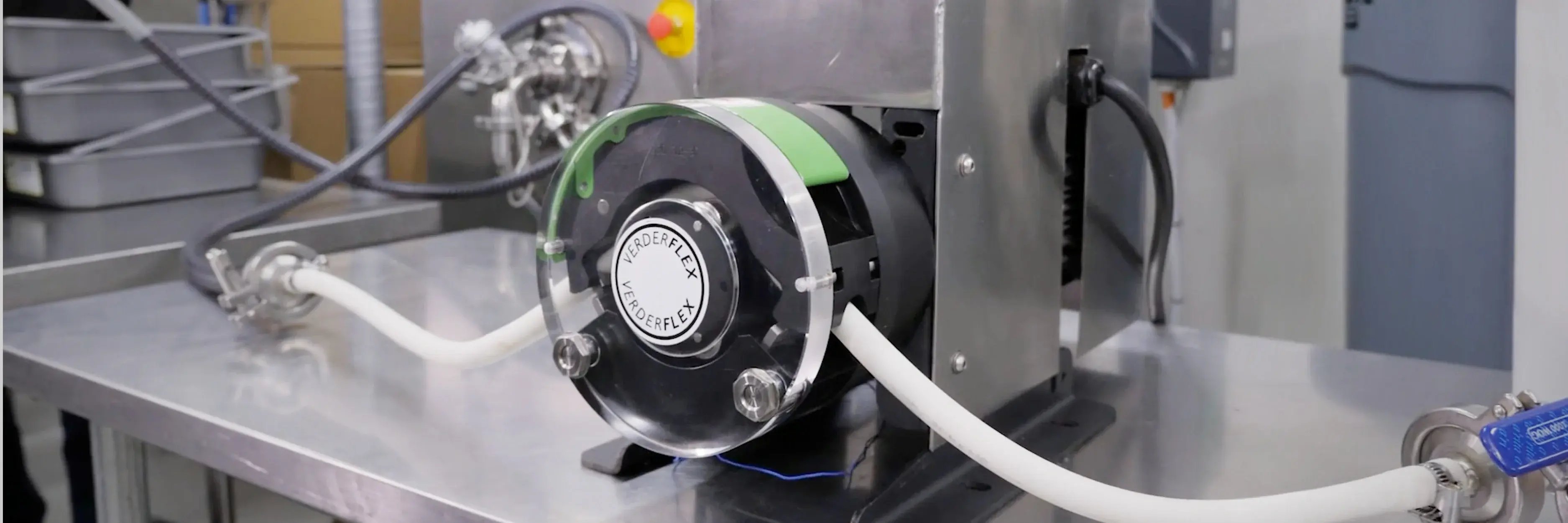
This Global Pumps guide explains how hose pumps prime, whether they need priming by hand, and what happens when they draw air or run out of liquid. For the broader operating principle, read how peristaltic pumps work.
How a hose pump primes itself
As each shoe passes, the hose recovers its shape behind it and draws in whatever is in the suction line, air first, then liquid
This pumping action displaces air as well as liquid. The pump clears air from the suction line, allowing liquid to follow. It does not need process liquid already in the hose to begin priming.
Do peristaltic pumps need to be primed?
No manual filling with process liquid is required. With the pump correctly installed and the suction arrangement within its operating limits, starting the pump clears air from the line and draws liquid towards the inlet.
Our Global Pumps technical team points to two things that are sometimes mistaken for priming. The first is casing lubricant. Many Verderflex hose pumps use lubricant around the hose and shoes. This reduces friction, provides cooling and supports hose life. It is not priming liquid, but the specified lubricant and level remain necessary for correct operation.
The second is an air leak. A loose fitting, worn gasket or cracked suction hose can let air in and prevent the pump from developing sufficient suction to lift liquid. If a pump is slow to prime, check the suction line for leaks.
How far can a peristaltic pump lift liquid?
Verderflex lists a suction lift of up to 9.5 metres of water column (m wc) for its VF hose pumps. That is the manufacturer’s maximum, so treat it as an upper limit, not a figure to plan a site around.
The lift you can reach on site depends on the model and the installation. A worn hose, high viscosity, elevated liquid temperature, long or narrow pipework and suction-side air leaks can all reduce it. Hose condition matters in particular, and our guide to peristaltic hose life covers the operating practices that affect it.
A short, adequately sized, airtight suction line and a pump located close to the liquid source help support priming performance. Check the rated suction capability for the pump you’re considering before you rely on a particular lift.
Can peristaltic pumps pump air?
Yes. Verderflex hose pumps can pass air through the hose, which allows them to clear an empty suction line during priming. Their ability to handle air also helps avoid vapour-lock interruptions.
If a tank runs empty, the pump can continue operating and move air through the line, but it delivers no liquid while the source is empty. When liquid returns, it can resume liquid transfer without manual re-priming, provided the suction conditions remain within its limits.
If the liquid carries gas, the amount of liquid delivered can fall and dosing accuracy can be affected. On a metering duty, investigate where air is entering rather than relying on the pump to cope with it. Passing air during priming does not by itself establish suitability for a continuous gas-pumping duty.
Can a peristaltic pump run dry?
Yes. Verderflex hose pumps have dry-running capability. The process liquid stays inside the hose, with no impeller or mechanical seal in contact with it.
Dry running means operating without process liquid inside the hose. It does not mean operating without any casing lubricant specified by the manufacturer. Required lubrication and normal pre-start checks still apply.
If your pump could run empty for long periods, tell us the model and duty cycle so we can confirm the operating limits with the manufacturer. A level switch or suitable flow sensor can provide a stop signal for an unattended pump.
Where self-priming peristaltic pumps work best
Self-priming is useful where suction conditions change or liquid levels vary. A trolley-mounted pump moved between tanks and sumps can start at each location without manual priming, provided each suction arrangement is suitable.
A hose pump can also continue operating when air reaches it from a low tank, although liquid delivery stops when the supply runs out. Its ability to handle abrasive, viscous and shear-sensitive liquids makes it worth considering for dosing and chemical transfer.
For high flows of thin liquid, a self-priming centrifugal pump may be a more suitable choice.
If you would like us to check a suction arrangement or a model against your application, contact the Global Pumps engineering team. You can also explore our peristaltic pump range.